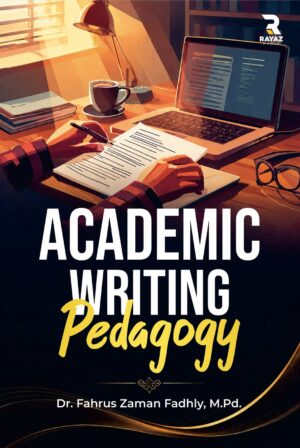
Judul: Academic Writing Pedagogy
Penulis: Dr. Fahrus Zaman Fadhly, M.Pd.
Penerbit: Rayaz Media
Sinopsis:
Academic Writing Pedagogy” by Dr. Fahrus Zaman Fadhly, S.Pd., M.Pd. provides a comprehensive guide to teaching and learning academic writing in higher education, with particular focus on the Indonesian and Asian context. The book addresses the growing demand for English academic writing proficiency as universities internationalize and expect students to produce research proposals, theses, and journal articles. It is structured around fourteen chapters covering foundations of academic writing, genres, critical reading, argument development, paragraph structure, academic style, source use, citation, literature reviews, research papers, revision, Al in writing, publishing, and writing pedagogy itself. This complete structure ensures readers understand both the product and process of academic writing.
The book integrates process-based and genre-based pedagogical approaches, emphasizing the recursive nature of writing through stages like prewriting, drafting, revising, and editing, while also foregrounding the social and rhetorical dimensions of academic texts. The Teaching- Learning Cycle-building context, modelling, joint construction, and independent construction scaffolds students’ development. The book also addresses collaborative writing, peer feedback, and assessment, proposing a complementary feedback model where peer feedback fosters autonomy and teacher feedback provides expert guidance. Significantly, it engages thoughtfully with generative Al challenges, proposing “Al-aware pedagogy” that centers human decision-making, ethical engagement, and transparency in hybrid human-Al writing contexts.
This book serves as an invaluable resource for students, educators, and researchers in English language teaching. For students, it offers clear guidance on navigating academic writing complexities; for educators, it provides evidence-based strategies, rubrics, and practical frameworks. Its attention to the Indonesian higher education context and alignment with Merdeka Belajar policies makes it particularly relevant for Indonesian readers. Ultimately, the book embodies the conviction that academic writing is a powerful tool for learning and participation in scholarly communities, and that writing instruction empowers students to find their voices and contribute to meaningful academic conversations.
Cetakan Pertama: September 2026